.png?width=663&height=409&name=download%20(1).png)
AI Video Generator

When planning a bathroom renovation, it is easy to get caught up in the visual appeal of subway tile, rainfall showerheads, and elegant lighting. However, the true workhorse of the room is the vanity. It is the space where your day begins and ends, holding toiletries, managing plumbing, and providing the primary surface for daily grooming. While the mirror reflects the room, the cabinetry dictates how the space actually functions. Understanding the structural integrity of your storage solutions is far more critical than the decorative elements.
Retail stores offer countless options that look appealing on the surface. These furniture style units often mimic the appearance of high end pieces but are constructed using cost cutting methods. The most significant difference lies in the carcass, or the main body of the cabinet. Big box stores frequently use particleboard or medium density fiberboard. While these materials are inexpensive, they perform poorly in a humid environment. If the protective laminate layer gets scratched or if moisture seeps into the sink cutout, particleboard acts like a sponge, swelling and crumbling irreversibly.
In contrast, premium builds utilize plywood or high quality marine grade composites for the carcass. Plywood is composed of thin layers of wood veneer glued together with the grains alternating at right angles. This cross grain construction makes it incredibly stable and highly resistant to the warping and swelling caused by bathroom humidity. Furthermore, premium builds feature fully finished interior surfaces. A sealed interior prevents moisture from penetrating the raw wood from the inside, which is crucial when storing damp towels or cleaning supplies.
Hardware is another area where quality becomes immediately apparent. Daily use requires hinges and drawer slides that can handle significant weight and repetitive motion. Cabinetry grade pieces utilize soft close mechanisms with steel ball bearing slides, ensuring that drawers glide smoothly and close quietly, even when loaded with heavy bottles and appliances.
Space is a premium commodity in older homes or compact powder rooms. Standard manufactured units typically come in a fixed depth of twenty one inches. While this depth works well for large master baths, it often protrudes too far into smaller rooms, creating a cramped walking path and making the space feel claustrophobic.
This is where the advantage of custom vanities becomes undeniable. By working with a dedicated millwork shop, you can dictate the exact dimensions of your unit. Reducing the depth by just three or four inches might seem minor on a tape measure, but in a tight floor plan, it dramatically improves traffic flow and visual openness. A shallower cabinet can still provide ample storage by utilizing the full height of the interior space or incorporating specialized pull out organizers, ensuring you do not sacrifice functionality for the sake of square footage.
The bathroom is a demanding environment regarding material performance. Fluctuating temperatures from hot showers and high humidity levels require finishes that can withstand rigorous conditions without peeling or cracking.
When exploring finish options for your vanity design, you generally have three primary routes. Painted finishes offer a crisp, clean look and are highly customizable in color. To survive a bathroom environment, the paint must be catalyzed or specially formulated to resist moisture and yellowing over time. Stained finishes highlight the natural grain of the wood, bringing warmth and organic texture to the space. These require a high quality topcoat, such as a conversion varnish, to protect the wood from water rings and splashes.
Two tone configurations have also become incredibly popular, allowing homeowners to mix materials for visual interest. For example, you might pair a painted wood frame with a natural wood grain drawer front, or combine a matte finish with high gloss accents. Regardless of the aesthetic choice, the underlying material of cabinet vanities must be properly sealed on all six sides, including the back and the bottom edges, to prevent moisture intrusion.
The mounting style alters the visual weight of the room and dictates the necessary wall preparation. Floor standing units are the traditional choice. They bear their own weight and the weight of a heavy stone countertop directly through the floor. They are generally easier to install and provide maximum internal storage volume since the cabinet extends all the way to the ground.
Floating vanities, which are mounted directly to the wall with no visible legs, create a sleek, modern aesthetic. By exposing the floor beneath them, they make the room appear larger and make cleaning the floor much easier. However, this style requires significant structural preparation. Because the entire weight of the cabinet, the countertop, and the sink is suspended on the wall, the framing behind the drywall must be heavily reinforced. Installers must open the wall to install solid wood blocking between the studs to ensure the unit is securely anchored. The team at The Cabinet Mill ensures that these structural requirements are meticulously planned before installation begins, preventing costly drywall repairs or unsafe mounting later on.
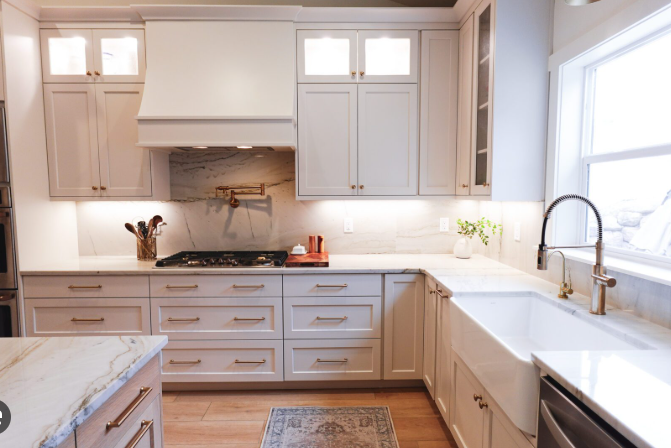
The principles of good storage are universal, and the engineering behind a heavy duty kitchen vanity applies directly to the bathroom. Both spaces require resistance to water damage, heavy duty hardware to support dense items, and intelligent interior layouts. In the kitchen, you might use deep drawers for pots and pans, while in the bath, those same deep drawers are perfect for storing bulk toilet paper, cleaning supplies, and large hair tools. Recognizing that these spaces share identical functional demands helps in selecting a manufacturer who understands structural cabinetry rather than just decorative furniture.
The longevity of your renovation depends on the materials hidden beneath the surface. While tiles and fixtures can be swapped out relatively easily, replacing a failing cabinet involves plumbing disconnection, countertop removal, and potential drywall repair. Investing in superior construction, moisture resistant materials, and precise sizing ensures that the space functions flawlessly for decades. When exploring bathroom vanities Windsor Essex homeowners should prioritize structural integrity, proper finishing, and customized dimensions to create a space that is as practical as it is beautiful.
Plywood is constructed from cross laminated wood veneers, making it highly dimensionally stable and resistant to swelling when exposed to moisture. Particleboard is made from compressed wood fibers and glue, which will rapidly expand and disintegrate if water penetrates the surface laminate.
Yes, provided the wall is properly prepared. The drywall must be removed to expose the studs, and solid wood blocking must be installed between the framing members. This creates a secure anchor point capable of holding the combined weight of the cabinet and a heavy quartz or stone top.
You can comfortably reduce the standard depth from twenty one inches down to eighteen or even fifteen inches. To compensate for the lost depth, the cabinet can be built slightly taller, or the interior can be fitted with pull out trays and vertical dividers to maximize every inch of available space.
Catalyzed varnishes and conversion varnishes are the most durable options. Unlike standard polyurethane, these finishes chemically cure to create a hard, impermeable shell that resists peeling, cracking, and water spotting, even in environments with extreme temperature and humidity fluctuations